NOVA WATER Mobile App
A mobile application designed to deliver clean, trusted water directly to users in KSA, replacing unreliable offline vendors with a seamless digital ordering experience and real-time delivery tracking.
Role
UX Designer Lead
Timeline
2 months (2022)
Platform
iOS & Android
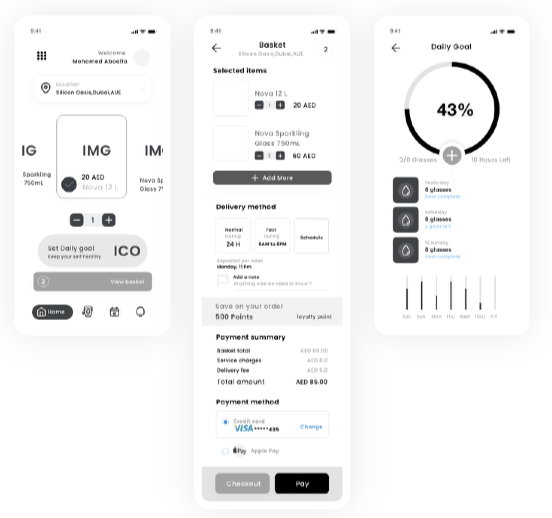
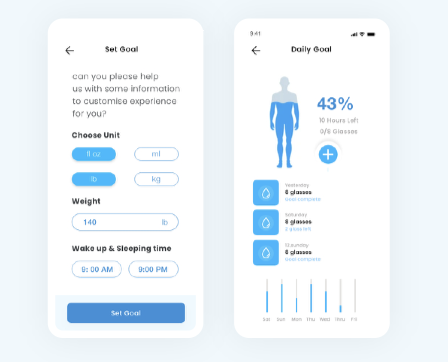
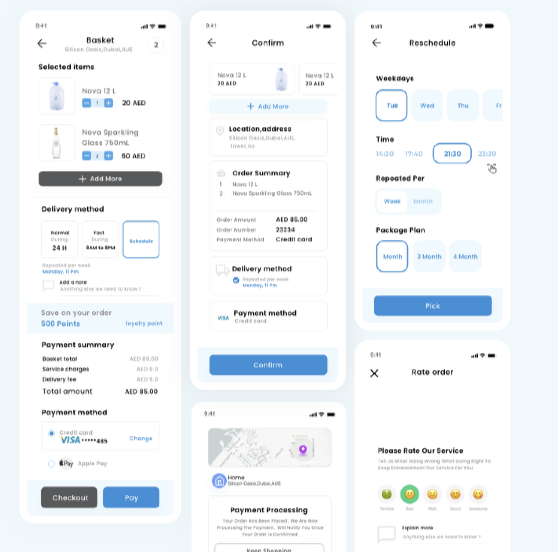
The Challenge
With increasing pollution and water adulteration in KSA, users are becoming more concerned about water quality.
During initial research, we discovered that many people still rely on offline water vendors, facing issues such as:
- •Unreliable delivery times
- •Lack of hygiene assurance
- •Difficulty tracking orders
- •No ability to modify or cancel deliveries
- •No digital history or proof of orders
This revealed a clear gap and opportunity to shift users toward a trusted digital platform.
Research & Discovery
Through early research, we explored how people in KSA currently order water and what challenges they face. We identified four main user groups with different needs and behaviors:
Home Users
Individuals and families living in permanent or temporary homes who need a reliable and regular supply of drinking water.
Restaurants & Hotels
Businesses that require frequent bulk orders and smooth delivery scheduling to support daily operations.
Workplaces
Offices, schools, construction sites, and other organizations that need multi-location deliveries and easy order management.
Donation Users
People who want to donate water to mosques or charitable entities and need a simple, transparent way to send their contributions.
Understanding these user segments helped us shape a solution that works across household, commercial, and donation scenarios.
User Personas
Fatima — The Family House Manager
Household / Main Persona
Age: 34 | Location: Riyadh
Family Status: Married, 2 kids
Overview
Fatima manages her home and prefers reliable services. She values health for her family and wants a smooth way to order household essentials like water without calling or dealing with delivery delays.
Goals
- ✓Keep consistent stock of healthy drinking water at home
- ✓Place recurring orders easily
- ✓Track delivery time accurately
- ✓Get notifications when bottles are delivered or empty
Frustrations
- ✗Delayed or unpredictable delivery timing
- ✗No clear delivery instructions or driver updates
- ✗Difficulty canceling or modifying orders
Asma — The Working Professional
Professional Women / Busy Lifestyle
Age: 29 | Location: Jeddah
Occupation: Project Manager
Family Status: Married
Overview
Asma is busy with work and kids. She needs services that save time, automate orders, and give her control when she needs it. She prefers a clean, quick, mobile experience.
Goals
- ✓Maintain water supply without manually reordering
- ✓Manage orders across home & office
- ✓Adjust delivery times when schedule changes
- ✓See driver status and estimated time of arrival
Frustrations
- ✗No ability to change delivery slot
- ✗Orders processed incorrectly
- ✗Missing or late delivery updates
Key Findings
Unreliable Delivery
Users complained about late or missed deliveries without prior notification.
No Hygiene Trust
No way to verify cleanliness or quality of water or delivery process.
No Order History
No record of past orders, making it hard to track spending or reorder.
Cannot Modify Orders
Once placed, orders were hard to change or cancel.
No Tracking
Users didn't know when the water would arrive.
Lack of Reminders
People often ran out of water before remembering to reorder.
Payment Issues
Payment was mostly cash-based, with no digital receipts.
No Health Goals
Users wanted a way to track daily water consumption and set goals.
Artifacts
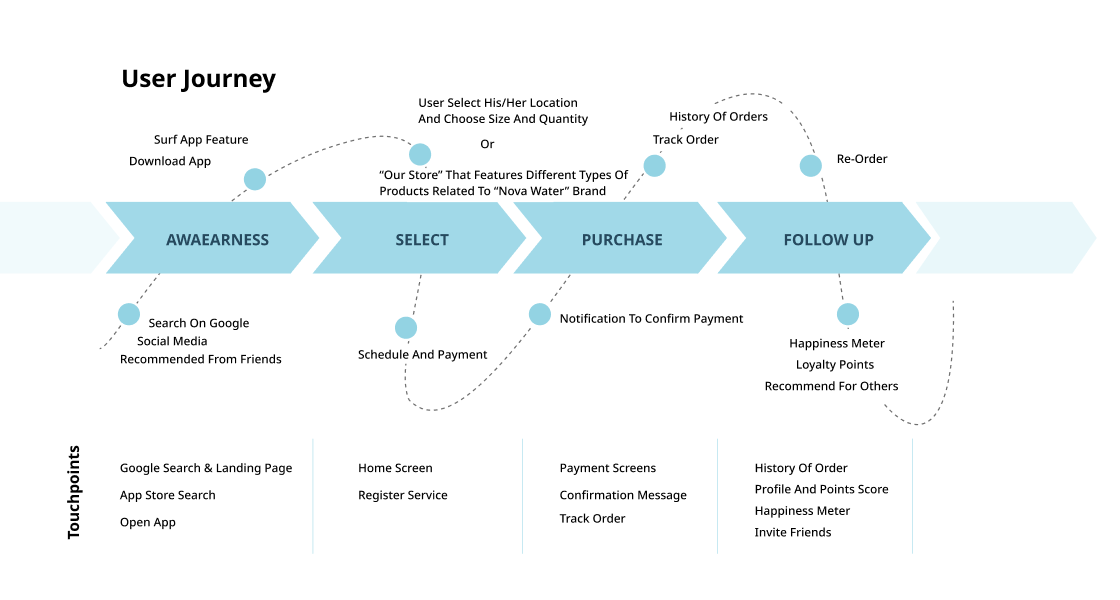
User Journey
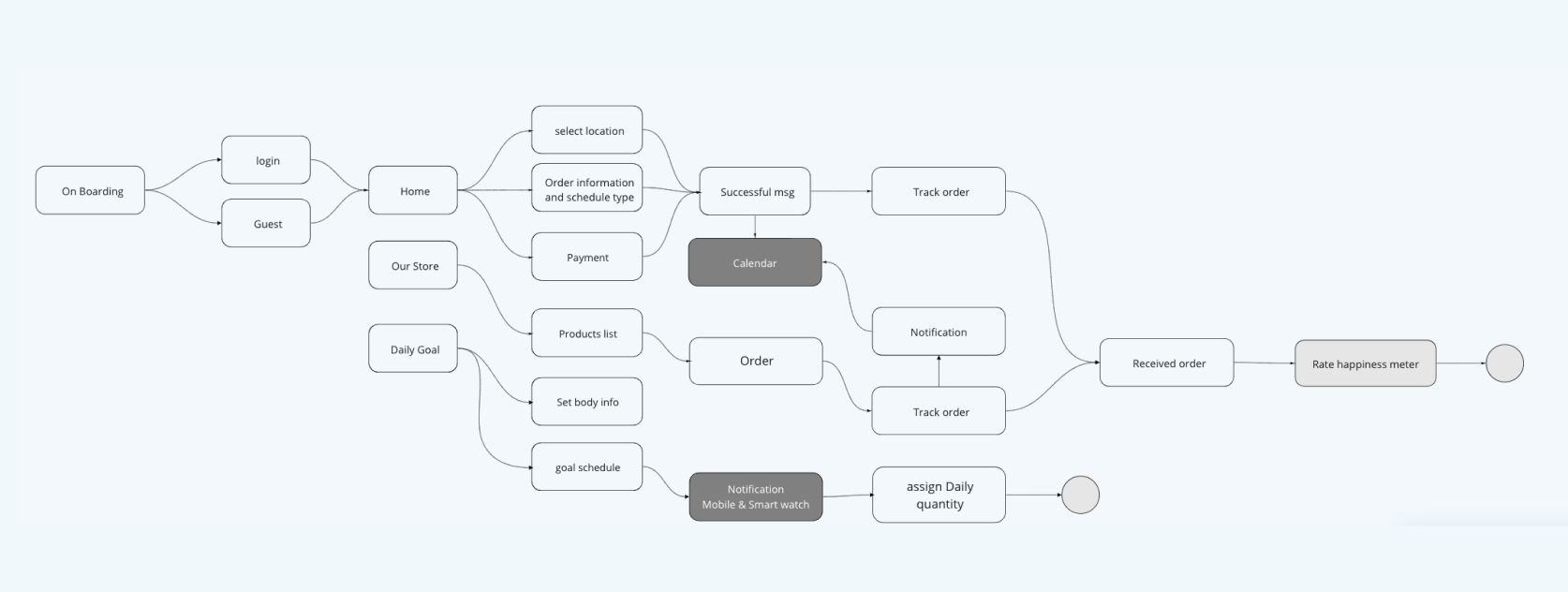
User Flow
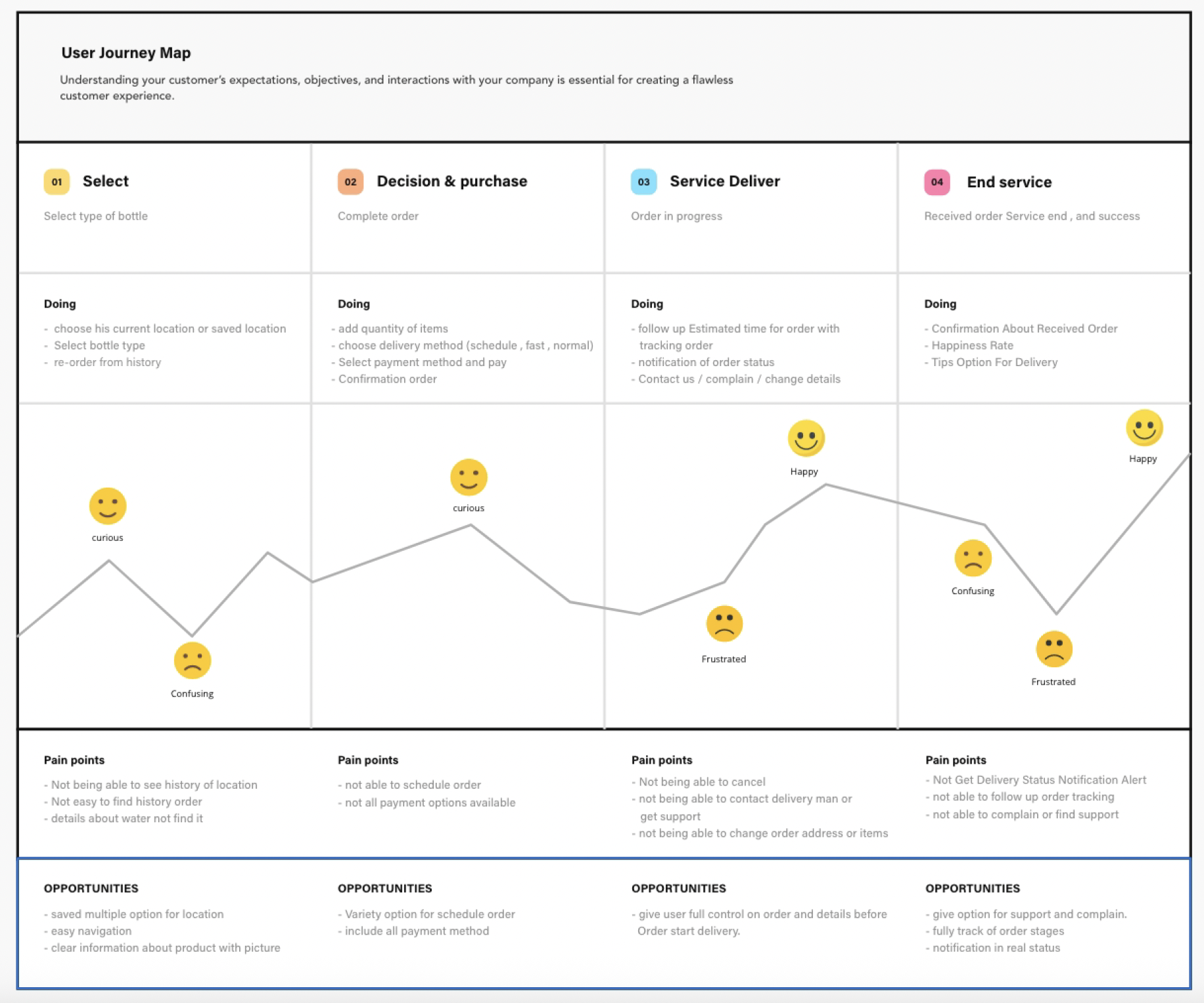
User Journey Map
Results & Impact
Improved delivery reliability with clear ETAs and real-time tracking.
Increased user trust through transparency and hygiene-focused messaging.
Higher engagement thanks to daily water goals and reminders.
Faster reordering and stronger retention through recurring deliveries.
Growth in donations with a simple 'Donate to Mosque' flow.
Better order management for homes, restaurants, workplaces, and multi-location users.
Key Learnings
Designing for essential services like water delivery in KSA required deep cultural understanding and empathy for diverse user groups—from families to restaurants to donation-minded individuals.
The most impactful features weren't flashy—they were simple reliability indicators: clear ETAs, real-time tracking, and hygiene transparency. Users valued trust and consistency over complex features.
Balancing health-focused features (like daily water goals) with transactional needs (ordering and tracking) taught us that engagement comes from solving real problems first, then adding value-added experiences.
Working with stakeholders across different user segments—homeowners, business owners, and charitable organizations—highlighted the importance of flexible design systems that adapt to varied contexts while maintaining a unified brand experience.